
Risk-Based Cyber Defense for Healthcare
- ServiceIT+

- Jul 7
- 1 min read
Healthcare in the Philippines is rapidly embracing digital technologies—from electronic health records and connected medical devices to cloud platforms and telehealth. While these innovations improve patient care, they also expand the attack surface and increase cyber risk.
The 2023 PhilHealth ransomware incident highlighted how cyberattacks can disrupt healthcare operations, expose sensitive data, and impact public trust. As vulnerabilities continue to grow, healthcare IT teams must focus on the threats that matter most.
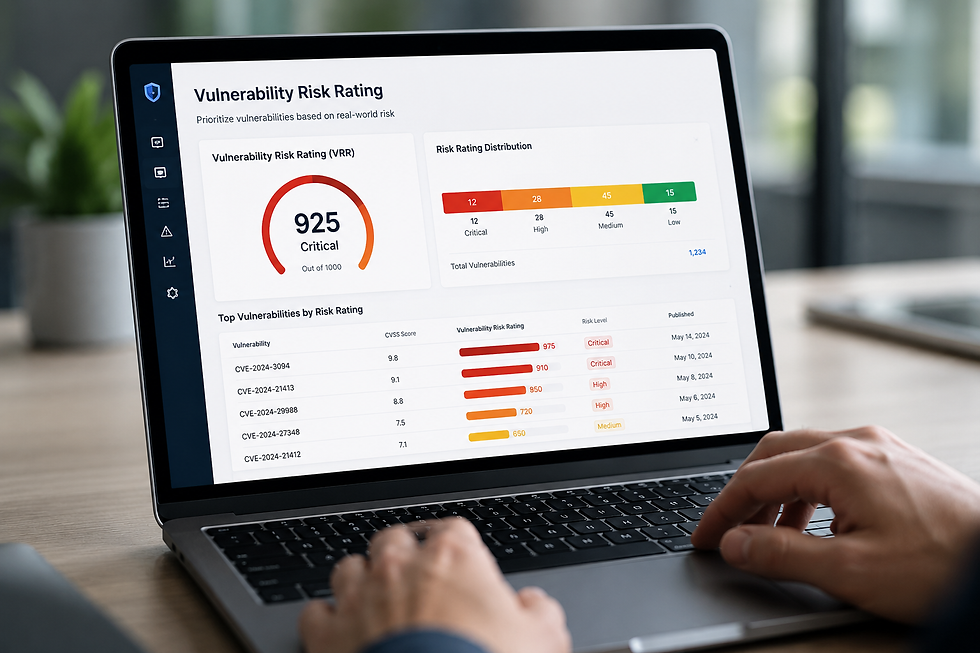
Vulnerability Risk Rating (VRR) helps prioritize vulnerabilities based on their real-world likelihood of exploitation, enabling healthcare organizations to remediate the most dangerous risks first.
For example, if two vulnerabilities have the same CVSS score but only one is actively being exploited, VRR identifies it as the higher priority for remediation.
Healthcare cannot afford downtime. When healthcare organizations, such as hospitals and pharmaceutical companies, are disrupted by these vulnerabilities, By focusing resources where they have the greatest impact, healthcare organizations can reduce cyber risk, strengthen operational resilience, and maintain uninterrupted patient care.
At Service IT+, we help healthcare organizations adopt a smarter, threat-driven approach to vulnerability prioritization—so they can stay resilient against evolving cyber threats.
Connect with Service IT+ to learn how intelligent vulnerability prioritization can strengthen your cybersecurity posture.


